

Sterex®
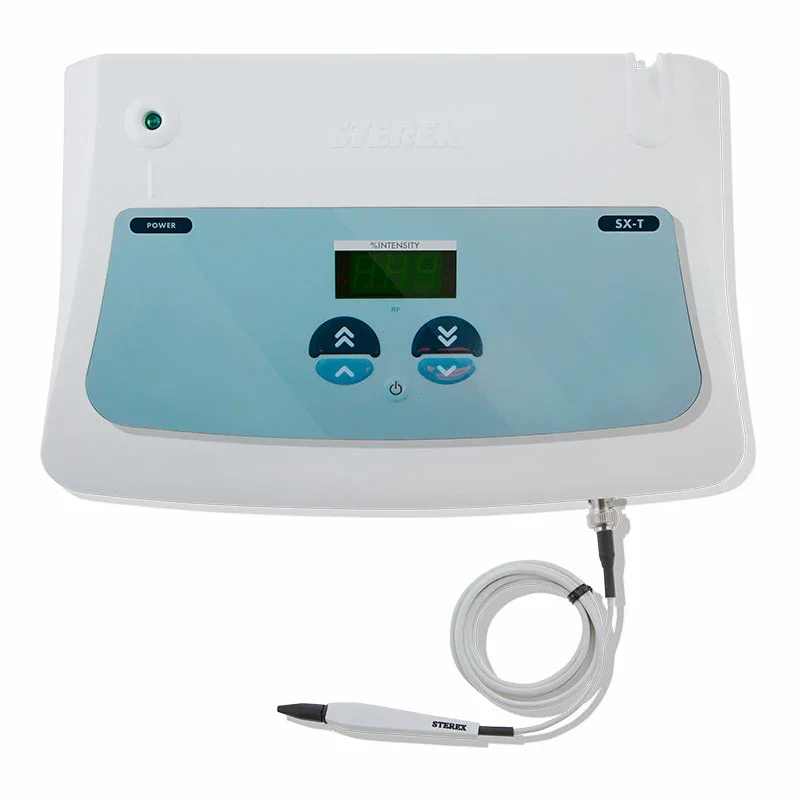
What is Sterex®?
Sterex® is an advanced diathermy treatment that uses a fine, sterile probe and a controlled high-frequency current to safely, precisely and effectively remove a wide range of benign skin blemishes and imperfections. The treatment targets the affected tissue with minimal impact on the surrounding skin, making it ideal for delicate areas, including the face.
Sterex® has been trusted by medical and aesthetic professionals for decades and is one of the leading systems for the treatment of common skin blemishes. It provides a fast, effective and minimally invasive solution for the removal of:
• Milia
• Skin tags
• Cherry angiomas (blood spots)
• Sebaceous hyperplasia
• Thread veins (facial telangiectasia)
• Campbell de Morgan spots
• Small benign skin lesions
How does Sterex work?
Sterex® uses advanced diathermy technology to safely and precisely remove unwanted benign skin blemishes. A fine, sterile probe delivers a controlled high-frequency current directly into the lesion, generating heat that destroys the targeted tissue while leaving the surrounding healthy skin largely unaffected.
As the treated tissue naturally heals, the lesion gradually disappears, leaving smoother, clearer skin. The precision of the treatment makes Sterex® particularly suitable for delicate areas such as the face and around the eyes, where accuracy is essential.
Sterex® is commonly used to treat milia, skin tags, cherry angiomas (blood spots), sebaceous hyperplasia, thread veins and other superficial benign skin lesions. Most treatments are quick, require no anaesthetic and involve minimal downtime, making Sterex® a convenient option for clients.
Why Sterex®?
Sterex® has been trusted by medical and aesthetic professionals for over 40 years and is one of the UK's leading diathermy systems for the treatment of benign skin lesions. Its advanced technology allows practitioners to treat imperfections with exceptional precision, making it ideal for even the smallest or most delicate blemishes.
Unlike treatments that rely on freezing the tissue, Sterex® uses carefully controlled heat to target only the affected area. This precise approach helps achieve excellent cosmetic results while minimising trauma to the surrounding skin. Every treatment is tailored to the individual, ensuring the most appropriate and effective method is used for each lesion.
The benefits of Sterex®:
• Treatments are quick, with most appointments taking just a few minutes.
• A precise, minimally invasive procedure using a fine, sterile disposable probe.
• Suitable for treating delicate areas, including the face and around the eyes.
• Minimal downtime, allowing you to return to your normal activities straight away.
• Excellent cosmetic results with minimal disruption to the surrounding skin.
• No anaesthetic is required, and the treatment is well tolerated by most clients.
FAQ’s
-
Sterex® is an advanced diathermy treatment that uses a fine, sterile probe and a controlled high-frequency current to safely and precisely remove a range of benign skin blemishes and lesions with minimal impact on the surrounding skin.
-
Sterex® uses controlled heat energy delivered through a fine probe to target and destroy the unwanted tissue. The treated area then naturally heals as the body sheds the lesion over time.
-
Once successfully removed, the treated lesion will not return. However, new lesions may develop over time due to factors such as genetics, ageing and skin changes.
-
There may be a brief warming, tingling or pinching sensation during the treatment as the diathermy energy is applied to the lesion. Some clients may experience slight tenderness or sensitivity afterwards, but any discomfort is usually minimal and short lived.
-
A fine sterile probe is used to deliver a controlled high-frequency current directly to the lesion, creating heat that destroys the unwanted tissue. The area then naturally heals as the body removes the treated lesion over time.
-
The treated area may appear slightly red, swollen or sensitive immediately after treatment. A small scab or crust may form as the skin heals, which will naturally shed over the following days to weeks depending on the size and type of lesion treated.
For larger and deeper lesions a second crust may form making the healing time slightly longer.
Although it is best to try to leave the treated area uncovered, a plaster or simple dressing may be applied if it is in an area which may lead to rubbing and aggravation. It is important not to pick at the crust as this may lead to scarring.
-
Sterex® is designed to minimise trauma to the surrounding skin, meaning scarring is uncommon. Following the correct aftercare, the treated area should heal naturally; however, as with any skin treatment, individual healing responses can vary.
-
Unfortunately we do not remove moles at Jessica Skin Clinic. As moles can carry a cancerous risk, this is better to be left to a specialised Doctor or Dermatologist. Always seek advice from the NHS if you are concerned about a mole.
-
Sterex® can be suitable for darker skin types, as the treatment targets the specific lesion rather than affecting the surrounding pigmentation. However, all skin types will be assessed during consultation to ensure the treatment is appropriate and to minimise the risk of changes in pigmentation.
-
Sterex® can be performed throughout the year, including during the summer months. However, it is important to protect the treated area from sun exposure and use a high SPF while the skin is healing to reduce the risk of pigmentation changes.
-
Most lesions will require 1-2 sessions, however larger or more stubborn lesions may require more.
This can be determined during your consultation.
-
There are no major restrictions following Sterex® treatment, and most clients can return to their normal activities straight away. We recommend avoiding excessive heat, sweating, swimming and direct sun exposure while the area is healing.
-
Skin, skin tags, age spots, warts, actinic keratosis, verruca’s, Milia, cherry angiomas and other benign skin imperfections.
-
Sterex® is suitable for most clients; however, a consultation is required to assess the lesion and ensure the treatment is appropriate. It may not be suitable for certain skin conditions, active infections or specific medical circumstances.